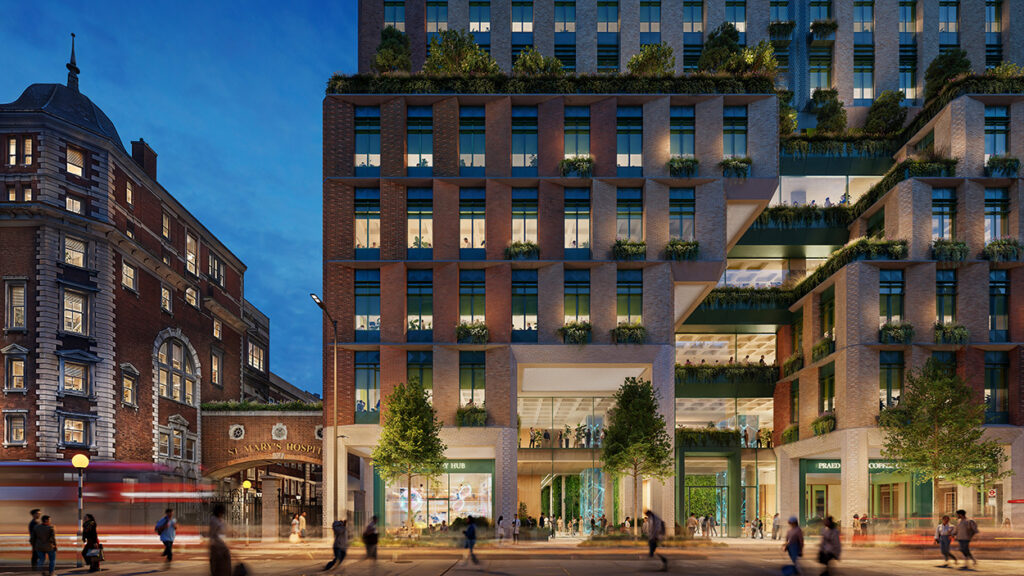
Paddington Hub: a world-class clinical life sciences hub
Westminster Council has approved plans for a new, bespoke life sciences hub on the site of the former Imperial College Medical School in Paddington.
Located on Praed Street, the Paddington Hub is designed to accommodate more than 1,800 clinicians, researchers and support staff in a purpose-built environment that accelerates medical discovery and improves patient outcomes. It will support the full pathway from discovery to patient care, enabling clinical trials, diagnostics and emerging health technologies within one integrated setting.
HOK is leading the design, drawing on lessons from its award-winning Francis Crick Institute in King’s Cross.
Paddington Hub represents a significant investment in Paddington’s future and a once-in-a-generation opportunity to create a world-class clinical life sciences hub next to St Mary’s Hospital. By backing it, Westminster City Council’s planning committee has given investors the confidence to deliver it. It will drive economic growth, support new jobs and strengthen the UK’s health innovation sector, and by bringing researchers, clinicians and patients together we can accelerate new treatments, improve outcomes and create meaningful opportunities for local people. We believe in Westminster, we believe in Paddington, and we are committed to both for the long term.
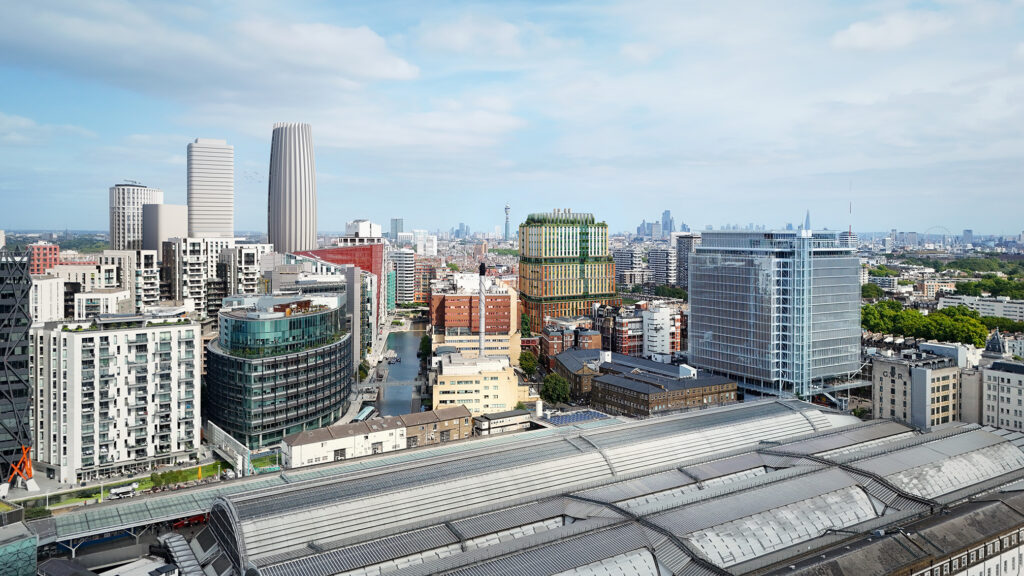
We have designed a high-quality, sustainable life science building next to St Mary’s Hospital for researchers, patients and the public. Its adaptable design is resilient to change, fostering critical breakthroughs by promoting a bench-to-bedside process, and co-locating patients and researchers improves efficiency and refines the clinical trials process. It has been a three-year design journey, shaped by the Design Review Panel and by the community. We are delighted this vital building can now become a reality.
Economic and employment benefits
Paddington Hub is forecast to deliver major long-term economic benefits for London and the UK, including:
- Up to 1,845 onsite jobs
- Up to 2,350 net additional jobs across London, including supply chain and induced employment
- £238 to £282 million in annual economic activity, equivalent to £2.5 to £3 billion over a decade
- £71 to £117 million in annual tax revenue, rising to £700 million to £1.2 billion over 10 years
The development will help address the acute shortage of high-quality space for clinical life sciences in London, supporting the growth ambitions in the government’s Life Sciences Sector Plan and the Mayor’s London Growth Plan.
Opportunities for Westminster residents
The development will create new employment and skills pathways for local people, including:
- 100 to 130 direct jobs for Westminster residents
- 50 apprenticeships, placements and early-career opportunities, many accessible without a degree
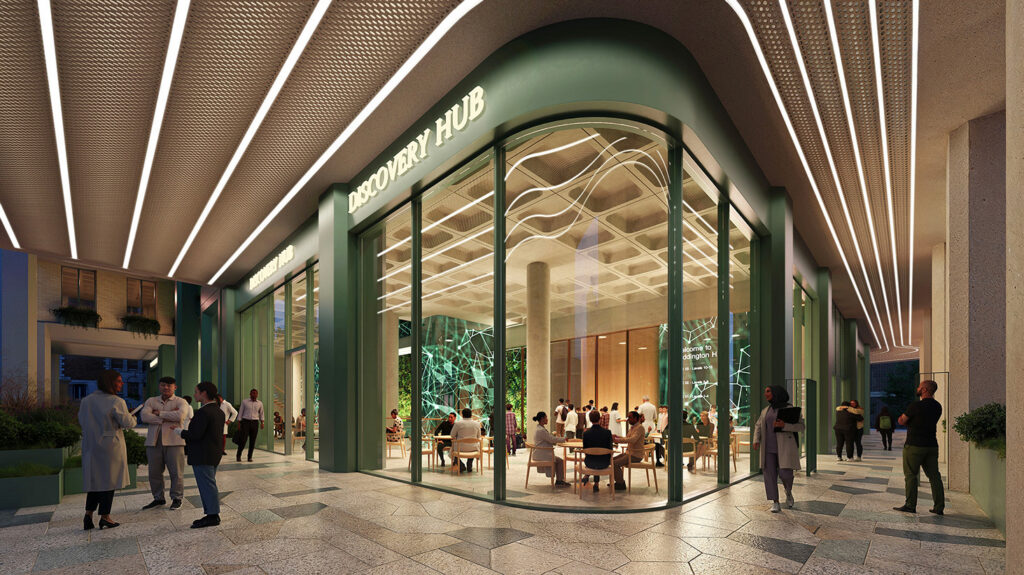
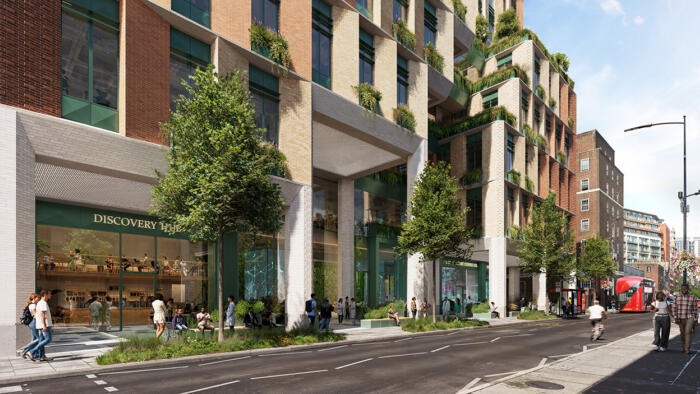
- A Discovery Hub, a community and learning space with its own entrance on Praed Street, working with local schools and curators
- A long-term skills pipeline linked to the Paddington Life Sciences cluster and St Mary’s Hospital
The project will also bring a long-vacant site back into productive use, support the revitalisation of Praed Street and strengthen connections with St Mary’s Hospital.
A new benchmark for clinical research design
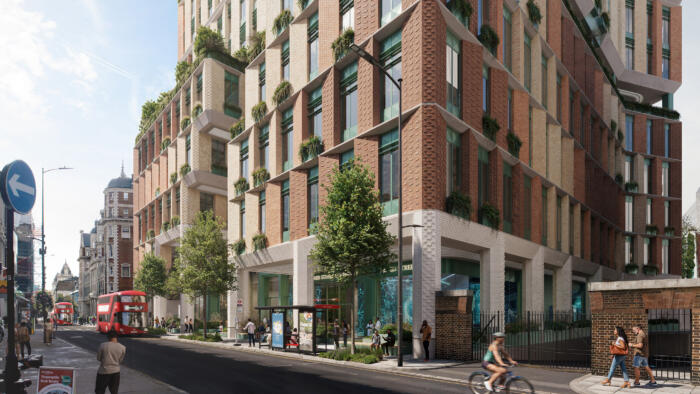
The design is highly flexible, accommodating clinical life science and trials space alongside active uses fronting generous and green improvements to the public realm and connectivity, with discreet onsite servicing. It keeps the original bridge link and entrance portico of the old medical school. Detailed conditions will now be agreed by officers in consultation with the Chair, including restricting the use to life sciences, landlord-managed landscaping, public realm, the community hub and coordination with the wider hospital masterplan.
I am delighted that Westminster’s planning committee has backed Paddington Hub, reinforcing the city’s reputation as open for business and open for investment. Paddington’s growing life sciences sector has received a much welcomed boost through this decision, bringing new jobs, improved streetscape and a state of the art Discovery Hub where Westminster’s next generation of scientists can learn, be inspired and take their first steps towards careers in life sciences.